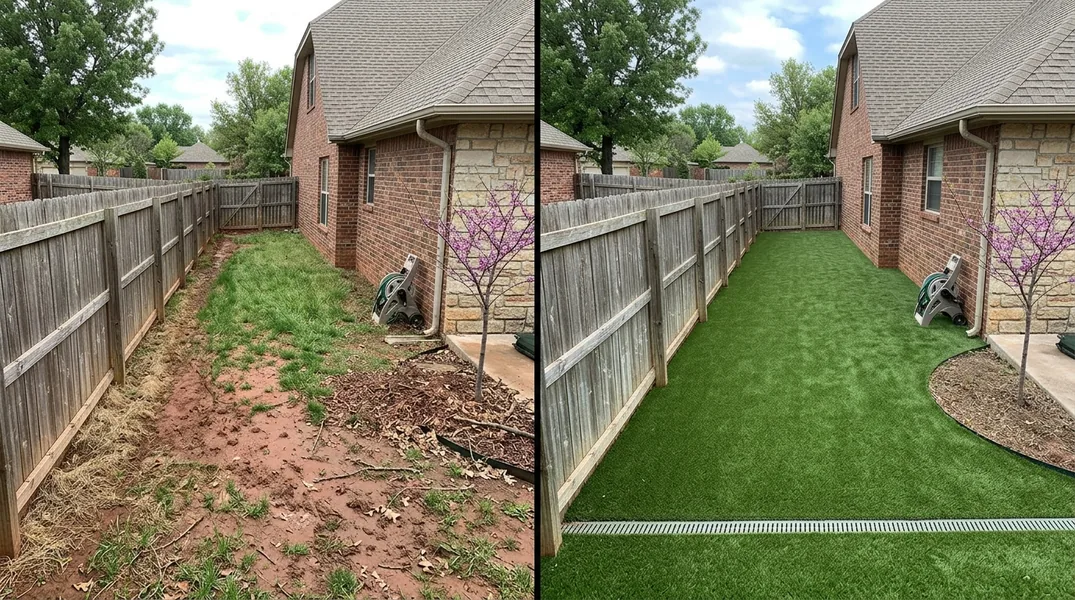
Turf vs Artificial Grass: Understanding Your Options in Tulsa
If you own a home in Tulsa, you've likely spent countless hours mowing, watering, and maintaining a natural lawn. The question many homeowners face is simple: should I keep my real grass, or make the switch to artificial turf? This isn't a decision to take lightly, as each option comes with distinct advantages and drawbacks that directly impact your lifestyle, budget, and property value.
The debate between turf vs artificial grass has shifted significantly over the past decade. Modern artificial grass technology has evolved far beyond the plastic-looking patches of the 1980s. Today's synthetic lawns look remarkably realistic, feel natural underfoot, and require a fraction of the maintenance that traditional grass demands. However, real grass still has its place, especially for homeowners who value the environmental benefits and the authentic feel of a natural lawn. Understanding the differences will help you make an informed choice that aligns with your priorities and lifestyle.
Real Grass in Tulsa: Bermuda and Fescue Explained
Most homeowners in Tulsa maintain either Bermuda grass or tall fescue, both popular choices for Oklahoma's climate. Bermuda grass thrives in warm weather and handles heat and drought reasonably well, making it a practical choice for summer months. It spreads quickly through rhizomes and stolons, filling in bare patches naturally. Tall fescue, on the other hand, performs better during cooler months and offers deeper root systems that help with water retention. Many homeowners in our region use a blend of both grasses to achieve year-round coverage, though this requires careful management.
The reality of maintaining real grass is that it demands consistent attention throughout the year. Spring brings the need for pre-emergent treatments and regular mowing as growth accelerates. Summer requires frequent watering, especially during Tulsa's hot, dry spells. Fall involves raking, aerating, and overseeding to prepare for winter dormancy. Winter brings its own challenges, including potential freeze damage and disease management. Beyond seasonal tasks, you're also dealing with weeds, pest control, fertilizer applications, and equipment maintenance. The cumulative time investment easily reaches 10 to 15 hours per month for the average homeowner, and that's before considering professional lawn care services that can cost $100 to $300 monthly.
Artificial Grass vs Real Grass: The Maintenance Reality Check
When comparing artificial grass vs real grass, the maintenance difference is perhaps the most compelling factor for busy homeowners. An artificial lawn requires no mowing, no watering, no fertilizing, and no seasonal treatments. You won't spend your weekends pushing a mower or worrying about brown patches during drought. Instead, occasional rinsing with a garden hose and light brushing to maintain the blade texture is all that's needed. For most homeowners, this translates to roughly 30 minutes of maintenance per month, compared to the hours required for natural grass.
The low maintenance yard appeal extends beyond just time savings. You eliminate the need for expensive equipment like mowers, aerators, and spreaders. You won't purchase fertilizers, herbicides, or fungicides. There are no emergency lawn care calls during unexpected weather events. Pet owners particularly appreciate artificial turf because it doesn't develop muddy patches, and urine doesn't create dead spots like it does with natural grass. If you have a Pet Turf & Dog Run Installation, you gain a durable surface that handles heavy use without degradation.
Cost Comparison: Initial Investment vs Long-Term Savings
The upfront cost of Residential Artificial Grass Installation typically ranges from $8 to $15 per square foot, depending on the quality of the turf and site preparation requirements. For an average residential yard of 2,000 to 3,000 square feet, you're looking at a significant initial investment. However, when you calculate the long-term financial picture, artificial grass often comes out ahead. Real grass maintenance costs accumulate rapidly: professional lawn care at $150 per month equals $1,800 annually, equipment purchases add another $500 to $1,000 per year, and water bills increase substantially during growing season.
Over a 10-year period, a real grass lawn typically costs between $25,000 and $35,000 when you factor in all expenses. Artificial turf, despite the higher initial installation cost, generally costs between $15,000 and $25,000 over the same timeframe, accounting for occasional maintenance and eventual replacement after 15 to 20 years. The payback period for artificial grass installation is typically 5 to 7 years, after which you're essentially operating at a significant cost advantage. For detailed pricing specific to your property, we recommend scheduling a consultation with our team.
Environmental Considerations: Water, Chemicals, and Sustainability
Natural grass advocates often point to environmental benefits, and they have valid points. Real grass absorbs carbon dioxide, produces oxygen, and supports local ecosystems. However, maintaining a real lawn in Oklahoma's climate requires substantial water resources, particularly during summer months when rainfall is limited. A typical residential lawn consumes 20,000 to 30,000 gallons of water annually, representing a significant portion of household water usage. Additionally, the fertilizers and pesticides applied to maintain healthy turf can leach into groundwater and local waterways.
Artificial grass eliminates water consumption entirely and removes the need for chemical treatments. While synthetic turf is petroleum-based and not biodegradable, modern installations use recyclable materials and require no ongoing chemical applications. The environmental equation becomes more favorable when you consider the cumulative impact of water conservation, reduced chemical runoff, and eliminated equipment emissions over many years. Neither option is perfectly sustainable, but artificial turf represents a pragmatic choice for homeowners prioritizing water conservation and chemical reduction in drought-prone regions like Oklahoma.
Aesthetic Quality: How Modern Artificial Turf Compares
One of the biggest misconceptions about artificial grass is that it looks obviously fake. Contemporary synthetic turf products feature multiple blade heights, varied color tones, and realistic textures that closely mimic natural grass. Premium installations using high-quality materials are virtually indistinguishable from real grass at normal viewing distances. The aesthetic quality depends heavily on the product selected and the installation quality. Professional installers understand how to select appropriate turf varieties for different applications, whether for general landscaping, Putting Green Installation, or Pool Surround Turf.
Real grass offers undeniable natural beauty, particularly during peak growing season when it's vibrant and lush. However, real grass also has seasonal variations and can appear brown, patchy, or stressed depending on weather and maintenance. Artificial grass maintains consistent appearance year-round, never showing stress from heat, cold, or disease. For homeowners who prefer a consistently manicured appearance without the ongoing effort, artificial turf delivers superior aesthetic consistency. The choice ultimately depends on whether you value the changing character of natural grass or prefer the reliability of a permanently green lawn.
Making Your Decision: Which Option Is Right for Your Tulsa Home
Choosing between real grass and artificial turf depends on your personal priorities, lifestyle, and long-term plans for your property. If you genuinely enjoy lawn care, have time for regular maintenance, and prioritize the environmental benefits of natural grass, then maintaining Bermuda or fescue may be the right choice. However, if you're seeking a low maintenance yard that looks great year-round while reducing water consumption and chemical use, artificial grass offers compelling advantages that justify the initial investment.
Consider your specific situation: Do you have mobility limitations that make lawn care difficult? Are you frequently away from home? Do you have pets that stress natural grass? Is water conservation important to you? Do you want to reclaim weekend time spent on yard work? If you answered yes to any of these questions, artificial turf deserves serious consideration. The best way to determine if artificial grass is right for your home is to discuss your specific needs with professionals who understand local conditions. Contact Tulsa Artificial Grass Installation at (918) 359-8874 to schedule a free estimate and see how artificial turf could transform your outdoor space. Our team can evaluate your yard, discuss your goals, and provide honest guidance about whether artificial grass makes sense for your situation.
Looking for a professional artificial grass installation company in Tulsa? Tulsa Artificial Grass Installation responds fast for all your artificial grass installation needs.
Get a Free Quote