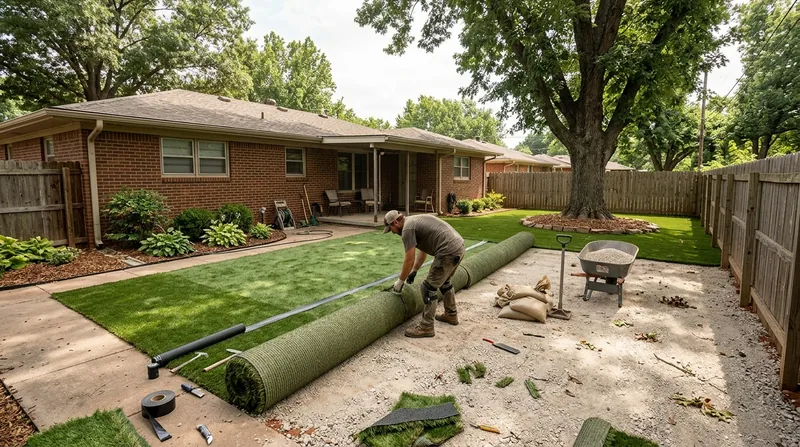




Residential artificial grass installation in Tulsa transforms backyards across Green Country, from the Tudor and Colonial Revival homes under towering pin oaks in Maple Ridge to the mid-century ranches of east Tulsa and the two-story brick homes with in-ground storm shelters in Broken Arrow, Bixby and Jenks. Tulsa's humid summers, spring hail, winter ice storms and the dense red clay on the hills create real challenges for natural lawns, especially under heavy shade where tall fescue thins and browns out. Artificial turf eliminates those seasonal battles while keeping your yard green year-round, and because we name the product, face weight, pile height and infill in writing, you know exactly what you're getting installed. We've been doing this work since 2013, and we work from Tulsa all the way out to Bartlesville and Wagoner. Start with a free estimate at (918) 359-8874.
Why Residential Artificial Grass Installation Matters in Tulsa's Climate and Soil
Tulsa sits in a zone where real grass faces real obstacles. The Arkansas River valley brings humid summers that push into the upper 90s, and the spring weather swings hard, with hail that shreds leaves and limbs, followed by winter ice storms that snap branches onto yards and freeze out dormant turf. The red clay on the hills compacts tight and sheds water, while sandy river-bottom soil near the Arkansas drains too fast. Bermuda thrives in the sun but browns out in the heavy shade cast by pecans, redbuds, post oaks and sweetgums that define so many Tulsa neighborhoods. Artificial grass sidesteps all of that.
- We install turf that stays green through Tulsa's ice storms, hail and summer heat without fertilizer, fungicide or weekly mowing.
- We build a proper base with drainage so water doesn't pool on clay or disappear into sandy soil, keeping the yard usable after rain.
- We choose face weight and pile height to match your sun exposure and foot traffic, not a one-size-fits-all roll.
- We handle HOA architectural rules on front-yard turf color, pile and edging, and submit the paperwork, though we never promise approval.
- We remove old sod, grade the lot and compact the base so your turf sits level and lasts.
Every residential job starts with a site walk to understand your drainage, sun and shade, the trees overhead and the soil you're working with.
Key info: Tulsa's spring hail and winter ice storms don't damage artificial turf, but poor base prep and bad drainage do. We dig down, compact, and slope the yard so water moves away from your home and pool, not toward them. A yard with a water problem gets fixed first, or we walk away.
For more on how artificial turf holds up in Tulsa's climate and how it compares to natural grass, see our full artificial grass and turf installation guide.
How We Install Residential Artificial Grass in Tulsa: Step by Step
We start every job with a free estimate on site. We walk your yard, measure the square footage, check the drainage and soil, look at the sun and shade patterns, and talk through your budget and what you want the turf to do, whether it's a play area for kids, a dog run, or just a low-maintenance yard that looks good year-round. We then spec the turf by name, face weight, pile height, infill type and base depth in writing so you know what you're paying for before we break ground.
- We remove the old sod and any debris, and haul it away.
- We call Oklahoma 811 for a free utility locate so we don't hit gas, electric or water lines buried in the yard.
- We grade the lot to slope water away from your home and any structures, and compact the base with a plate compactor to eliminate soft spots.
- We lay a perforated base layer (typically 1 to 2 inches of crushed limestone or recycled asphalt) and compact it again so the turf sits level and drains.
- We roll out the turf, cut it to fit the lot edges and any obstacles, and seam sections together with adhesive and a seaming iron so the joints are invisible.
- We brush the infill (sand, crumb rubber, zeolite or other material) into the pile to lock the turf in place and give it texture and drainage.
- We walk the whole yard and make sure every seam is tight, every edge is secure and the turf drains evenly.
A typical residential yard of 400 to 600 square feet takes one to two days. Larger yards or complex layouts with multiple seams and obstacles may take longer.
Example: A Broken Arrow home with a 1,200-square-foot backyard under shade from three large oak trees, with a patio at one corner and a fence line to work around, took us two days. We removed the old Bermuda, graded to slope the water away from the house, compacted a 2-inch base, and installed 50-ounce polyethylene turf with a 2-inch pile and zeolite infill so the yard drains fast and stays fresh even after rain. The seams ran parallel to the fence, and we edged the turf with aluminum trim so it stays in place.
For more on how we handle repairs and seam work on existing turf, see turf repair and seam repair.
| Approach | Description | Best for |
|---|---|---|
| Full yard replacement | Remove old sod, grade and compact a new base, install turf and infill from edge to edge. | Yards with poor drainage, compacted soil or uneven ground that need a fresh start. |
| Partial or sectional install | Install turf in a specific zone (backyard only, a dog run, or a patio border) while keeping the rest of the yard in grass or hardscape. | HOA front-yard restrictions, budget constraints or yards where only part of the property benefits from turf. |
| Overlay on hard surface | Install turf over an existing concrete patio or paver patio with a perforated underlay and proper slope for drainage. | Pool surrounds, patios and balconies where the base is already in place and the goal is softness and aesthetics. |
| Conversion from sod to turf | Remove existing sod, improve drainage and grading if needed, then install artificial turf with proper base preparation. | Homeowners tired of watering, mowing and fighting shade or clay, ready to switch to low-maintenance green. |
Residential Artificial Grass Installation Cost in Tulsa: What to Expect
Residential artificial grass installation in Tulsa starts at $8 per square foot for base materials and labor on a straightforward yard with good drainage and minimal obstacles. That price moves up based on site conditions. A yard with heavy shade, mature trees and complex grading costs more because we're spending extra time on base prep and working around root systems. A backyard with a patio, fence line or multiple seams adds cost. Access matters too: if we're carrying materials through a narrow gate or down a long side yard, the labor time goes up. Removal of old sod and disposal also factors in. On average, a 400-square-foot backyard runs $3,200 to $4,800 installed, and a 1,000-square-foot yard runs $8,000 to $12,000 or more, depending on those variables.
We always give you a detailed written estimate on site with the turf product, face weight, pile height, infill type and base depth spelled out. Get two or three estimates from different installers so you can compare not just price but what you're actually getting. The cheapest bid often means thinner turf on bare dirt with no real base, and that turf fails fast. We build a proper foundation and name every material so you can verify what goes in the ground.
For a full breakdown of pricing across all our services and some worked examples, see our artificial grass pricing guide.
Residential Artificial Grass Installation Near Me: What Tulsa Homeowners Should Know When Hiring
Choosing a turf installation company is about more than price. You want someone who shows up on time, listens to what you actually want, and leaves your yard cleaner than they found it. Before you hire anyone, get proof of general liability and workers' compensation insurance, and ask to see a certificate naming both. Ask for a written spec with the turf product name, face weight, pile height, infill type and pounds per square foot, and base depth and compaction method. Ask for references and photos of finished work in Tulsa or nearby towns like Broken Arrow, Owasso or Jenks. If the company won't give you those details in writing, walk away.
Check whether your HOA has architectural rules on front-yard turf. Many Tulsa neighborhoods, especially in Maple Ridge and around Philbrook, have strict guidelines on color, pile height and edging. We'll help you put together an HOA submittal, but we can't promise approval. Always check with your HOA before you start. If your yard has a history of standing water or poor drainage, ask the installer to explain how they're fixing that, because turf on a wet lot fails. If you have mature trees, make sure the installer understands how to work around root systems and compact the base without damaging the trees. Call us at (918) 359-8874 for a free estimate, and we'll walk you through all of this on site.
Learn more about all our services and how to get started at our contact and free estimate page.
Residential Artificial Grass Installation in Tulsa: Pricing Guide
| Service | Price | Details |
|---|---|---|
| Residential yard, 400-600 sq ft | Starting at $8/sq ft | Full removal, base prep, turf and infill; price rises with shade complexity and tree obstacles |
| Residential yard, 1,000+ sq ft | Starting at $8/sq ft | Larger footprint, multiple seams or patio integration may increase labor; site-measured estimate required |
| Partial or sectional install | Starting at $8/sq ft | Backyard only, dog run, or patio border; edges and transitions to existing lawn or hardscape add detail |
| Turf over hard surface | Starting at $6/sq ft | Pool surrounds, patios and balconies; perforated underlay and slope for drainage; less excavation needed |
| Travel and estimate | Free | No charge for on-site walk and written spec; service areas include Tulsa to Bartlesville and Wagoner |
Indicative pricing, the exact cost depends on square footage, finish, and site access. Free personalized estimate within 24h at (918) 359-8874.


